 Illustrative
All modules: fault memory, live data, circuit tests
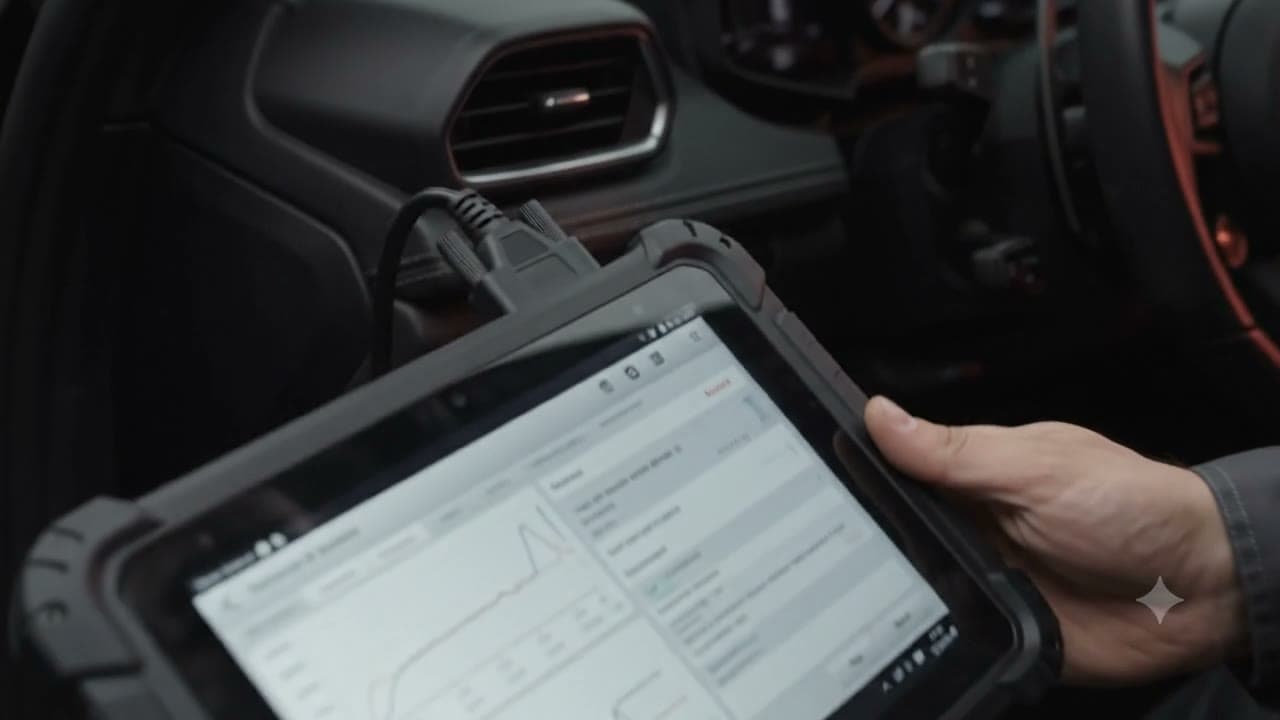
Automotive diagnostics and scanning
A full scan of the car’s control units and live data to find the cause of a warning light, fault or performance problem.
 Illustrative
For a warning light, a fault that keeps coming back, a module that needs programming or an airbag light after repairs.
IllustrativeIllustrativeWhat you noticed, when it happens, and anything already tried or replaced.
Exact model, engine, control unit and software version. The right procedure depends on all of them.
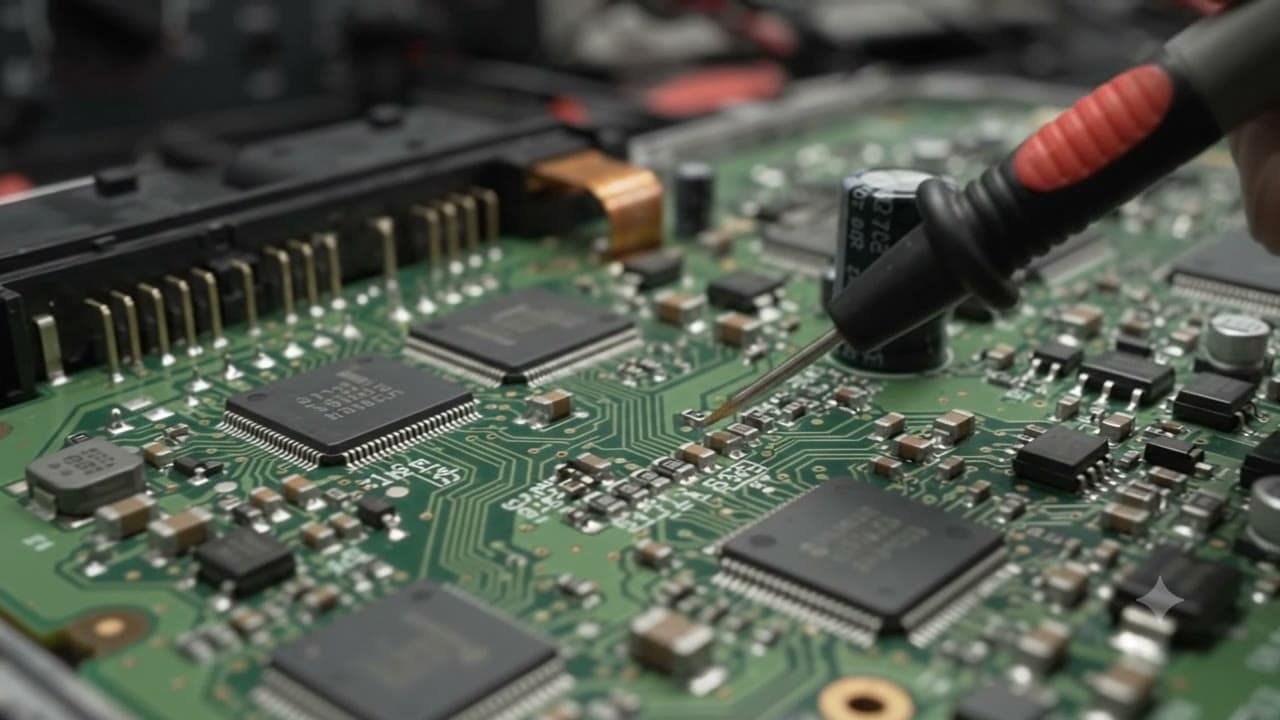
Fault memory, live data and measurements on the circuits involved. A fault code points the way; it rarely gives the answer on its own.
What was found, what it means, and the proposed work — before anything on the car is changed.
Programming, a reset, a repair or new keys — only the work you agreed to.
Fault memory re-read, live data checked, and a road test where it’s relevant.
A typical sequence. The exact procedure depends on the vehicle and the fault, and is confirmed when you book.
IllustrativeAll modules: fault memory, live data, circuit tests
A full scan of the car’s control units and live data to find the cause of a warning light, fault or performance problem.
 Illustrative
SRS crash data, fault memory, system check
Clearing stored crash data from an airbag (SRS) control module after accident repairs, so the system works and the warning light goes out.
 Illustrative
Service resets, coding, replacement cluster setup
Service resets, coding and programming for all types of instrument cluster, including setting up a replacement cluster.
IllustrativeEngine and body modules: program, code, update
Programming, coding and software updates for engine (ECM) and body (BCM) control modules, including setting up replacement units.
 Illustrative
Describe the symptoms or the goal, with the make and model. That’s enough to start.